
Business
Modern Real Estate Software Tools for 2026 Success
Modern real estate software helps agents manage deals, automate compliance, and track transactions. See why platforms like Clozze are redefining workflows in 2026.



Real estate software is designed to manage everything that happens after a contract is signed. It centralizes tasks, deadlines, communication, documents, and compliance into one operational workspace connected to each transaction. The most effective platforms, including Clozze, focus on contract-to-close execution rather than lead generation, giving agents and brokerages clear visibility and control over every active deal.
When a deal goes under contract, the real operational work begins. Deadlines accumulate. Emails increase. Documents circulate between agents, lenders, title companies, and clients. If your systems are dispersed across inboxes, spreadsheets, and transaction folders, mistakes become more likely.
Real estate software addresses this operational gap.
Real estate software is a platform that helps agents, brokers, and transaction coordinators manage transaction workflows, compliance requirements, deadlines, documents, and communication during the contract-to-close phase.
This type of software is different from a CRM.
CRMs focus on prospecting, marketing, and pipeline growth. Real estate software focuses on execution after a contract is signed. It keeps the transaction organized, on time, and compliant.
Every transaction follows a sequence of required steps. Disclosures need delivery, inspections must be scheduled, contingencies monitored, and lender milestones tracked.
Real estate software organizes these steps inside a deal profile. Each transaction has its own checklist, assigned responsibilities, and status tracking. Teams can view tasks at the individual deal level or across their entire pipeline.
Strong platforms support:
This structure reduces missed deadlines and eliminates confusion about responsibility.

Inspection windows, appraisal deadlines, and closing dates are inflexible. Missing one can threaten a deal.
Real estate software centralizes critical dates and connects them to shared calendars such as Google Calendar. Reminders and alerts keep contingencies, deposits, and lender requirements visible.
Instead of relying on personal calendars or memory, the system tracks time-sensitive milestones inside the transaction.
Email and text conversations are often scattered across devices and inboxes, creating operational risk.
Modern real estate software includes a unified inbox where email and text messages are organized by transaction. Every conversation related to a deal lives in one place.
This allows for:
When a team member joins a file, they see the complete context immediately.
Some platforms now incorporate AI into transaction workflows.
For example, Clozze includes AI-assisted messaging that drafts email and text responses based on transaction context. It can suggest follow-ups and prompt task creation, reducing manual coordination during high-volume periods.
Used appropriately, AI brings operational efficiency. It does not replace professional judgment. It speeds up repetitive communication and helps maintain momentum in active files.

Compliance is a primary reason brokerages adopt transaction management software.
Real estate software supports:
Some systems scan contracts, extract key dates and terms, and populate transaction fields automatically. This reduces manual data entry and minimizes errors.
Compliance dashboards provide broker-level visibility. Required forms are easily tracked, missing documents flagged, and license and insurance monitoring automated.
Instead of racing during audits, teams maintain ongoing compliance.

Operational visibility improves when transaction timelines are connected to shared calendars.
Real estate software often syncs with Google Calendar, allowing agents and coordinators to view:
Since events are directly linked to the transaction profile, users can move from a calendar reminder into the deal workspace without searching through folders.
Many brokerages already use platforms including:
Modern real estate software does not necessarily replace these systems. Instead, it can work alongside them.
For example, Clozze is frequently used as the communication and operational command center. Teams continue using their current transaction or compliance tools while centralizing inbox management, task automation, and shared deal visibility in one system.
This layered approach allows gradual adoption and minimizes disruption to established workflows.
Real estate teams typically implement operational software to:
At scale, these systems give leadership visibility into transaction flow and bottlenecks.
Understanding common terms clarifies vendor comparisons:
Vendors may use different terms, but the operational objectives are consistent.
Real estate software is a platform used by agents, brokers, and coordinators to manage transaction workflows, deadlines, document handling, compliance, and communication after a contract is signed.
It tracks required documents, flags missing items, logs activity, and prepares audit-ready records for broker review or regulatory submission.
Yes, if you want structured operational control after a deal goes under contract. While a CRM manages leads and relationships, real estate software manages execution from contract to close.
The best solution centralizes communication, tasks, compliance tracking, and calendar events within each transaction. Platforms such as Clozze are designed to deliver unified operational control while integrating with existing tools.
Teams create templates tied to deal types or stages. When a transaction is created, the system automatically generates deadlines, assignments, and reminders based on those templates.
A shared inbox for email and text, searchable by deal, with full team visibility. Advanced systems may offer AI-assisted drafting and contextual follow-up prompts.
It enables document uploads, automated imports, contract data extraction, and structured storage within transaction profiles. This reduces manual entry and improves compliance accuracy.
Real estate software is not about marketing or prospecting. It is about operational control.
When transactions are centralized, visible, and structured within one system, teams close deals with fewer surprises, fewer missed deadlines, and less internal friction.
.png)
Subscribe for real estate industry insights, transaction automation updates, and product news from Clozze. Get practical guidance on modern workflows, CRM tools, and transaction management delivered straight to your inbox.
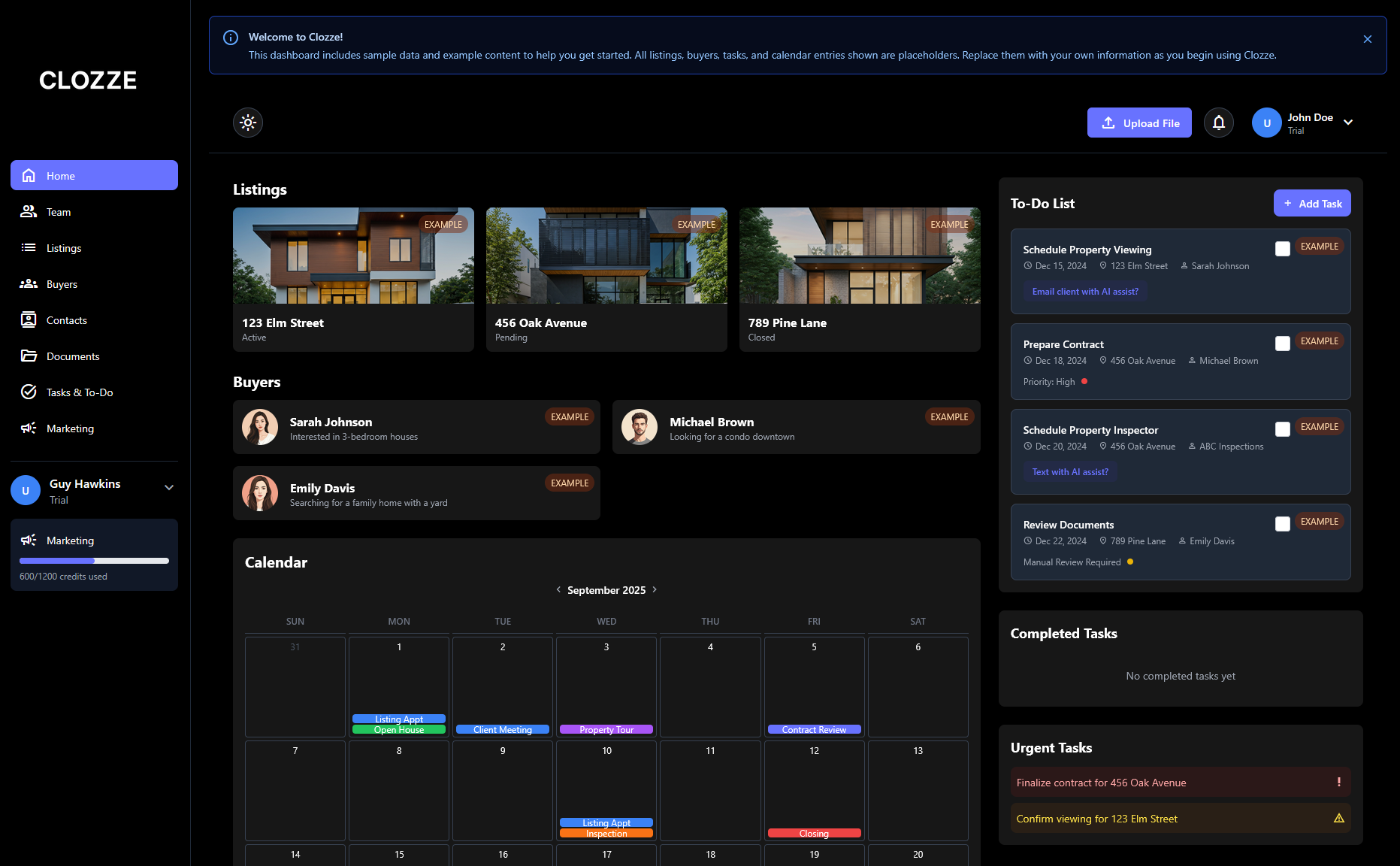
Modern teams use Clozze to streamline transactions, clozze faster and smarter with Ai, so they can focus on what matters most.