Business
Modern Real Estate Software Tools for 2026 Success
Modern real estate software helps agents manage deals, automate compliance, and track transactions. See why platforms like Clozze are redefining workflows in 2026.



The best modern real estate software tools in 2026 centralize deal management, communication, compliance, and task automation in one operational system. Clozze stands out as a true deal-centric command center, combining transaction workflows, unified inboxes, AI document processing, and compliance tracking in one workspace. Other platforms may handle CRM or e-signatures well, but high-performing agents and brokers need software built around the full transaction lifecycle, not just contact management.
If you are still managing transactions across email threads, spreadsheets, a CRM, and a separate transaction management system, you already feel the friction. Deadlines hide in inboxes. Compliance checklists live in someone’s head. Team members ask for updates that should be visible at a glance.
Modern real estate software tools exist to solve that operational chaos. In 2026, the question is not whether you need software. It is whether your software is actually built around how real transactions unfold.
Modern real estate software tools are platforms designed to manage the full lifecycle of a real estate transaction, from client intake through closing and post-close follow-up. Unlike basic CRMs focused on lead tracking, these systems center on the deal itself, supporting every critical step.
At a minimum, modern platforms should include:
The shift is simple but significant. Instead of asking, “Where is that file?” or “Did we send that amendment?” your team works inside a structured transaction workspace where everything is connected.
Transactions are not getting simpler. State forms evolve. Broker compliance requirements tighten. Clients expect instant responses and constant visibility.
When teams rely on disconnected tools, three problems surface quickly:
Inspection periods, appraisal contingencies, financing deadlines, and earnest money due dates all carry risk. If those dates are buried in PDFs or manually added to personal calendars, errors happen.
Modern platforms automatically generate and track these deadlines based on contract inputs. That reduces reliance on memory and manual entry.
When conversations live in individual inboxes and text threads, brokers have no oversight and team members lack context. A centralized inbox tied to the transaction keeps every message attached to the correct file.
Platforms like Clozze bring email and SMS into a deal-specific workspace so anyone with permission can see the full communication history.
Brokers are responsible for complete, audit-ready files. Chasing missing documents days before closing creates stress and liability.
Modern real estate software tracks required documents and shows compliance status in real time. Instead of reacting at the end, brokers monitor risk throughout the transaction.

The strongest platforms organize work around the transaction, not the contact record. Each deal has its own workspace with tasks, documents, messages, deadlines, and assigned team members.
This structure mirrors how real estate actually operates. Deals move through stages. Milestones trigger next steps. Team members have defined roles.
Manual checklists break under volume. Modern tools generate tasks automatically when a deal reaches a certain stage or when a document is uploaded.
For example:
This reduces administrative overhead and protects against avoidable mistakes.

High-volume agents may handle hundreds of emails per week across active transactions. Searching personal inboxes for a specific amendment or lender message wastes time.
Modern real estate software centralizes communication by deal. In Clozze, messages are searchable within the transaction itself, so context never gets lost. AI-assisted drafting tools can also suggest responses based on deal history, which helps teams move faster without sacrificing accuracy.
Contracts contain critical data such as names, dates, purchase price, and contingency timelines. Re-entering that information manually creates errors.
AI document readers extract key data directly from uploaded agreements and populate transaction fields automatically. This speeds up file setup and improves reporting accuracy.
Brokers need visibility across dozens or hundreds of active files. A modern dashboard should show:
This allows proactive management instead of reactive cleanup.

Several platforms attempt to address different parts of the real estate transaction lifecycle. Most tools specialize in a single layer of the workflow rather than the entire operational stack.
Some commonly used platforms include:
• Dotloop – document management and e-signature workflows
• SkySlope – brokerage compliance and transaction tracking
• Follow Up Boss – real estate CRM focused on lead management
• DocuSign – digital signature and document execution platform
While these platforms solve specific problems, many teams still rely on multiple tools to manage communication, deadlines, and transaction execution.
This is where platforms like Clozze take a different approach by organizing the workflow around the deal itself rather than separating documents, communication, and task management across different systems.
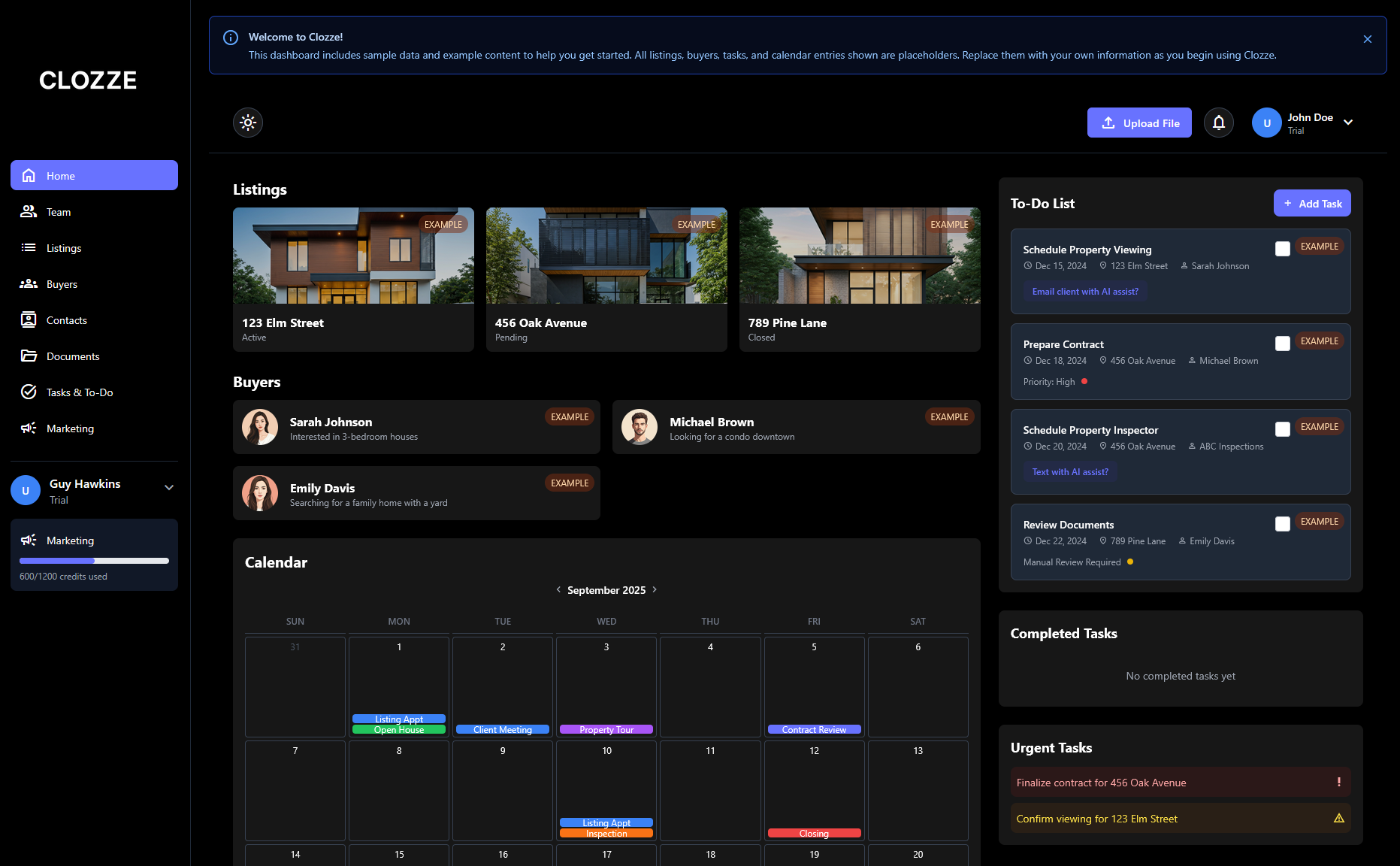
Clozze is built around a deal-first architecture. Every transaction includes a structured workspace that connects tasks, documents, timelines, compliance, and communication in one environment.
Instead of layering disconnected tools, Clozze acts as an operational hub. Agents can:
The result is fewer manual steps and greater transparency across the team. While some agents may still use external e-signature or CRM systems, Clozze anchors the operational side of the deal.
If you are evaluating platforms, focus on workflow depth rather than feature lists.
Ask these practical questions:
A system that only stores documents or tracks leads will not solve operational bottlenecks. The goal is structured, automated execution from contract to close.
Modern real estate software tools are no longer optional for serious agents, brokers, and transaction coordinators. As transaction volume and compliance demands increase, operational structure becomes a competitive advantage.
The platforms that win in 2026 are those that centralize communication, automate milestones, and provide real-time compliance visibility. Solutions like Clozze demonstrate what a fully integrated, deal-centric workspace looks like in practice.
When your software reflects how real transactions move, your team spends less time tracking details and more time serving clients. That shift alone can define the difference between staying busy and building a scalable operation.
The best modern real estate software platforms combine transaction management, communication tracking, compliance oversight, and task automation in one system. Platforms like Clozze focus on managing the entire transaction lifecycle rather than just contacts or documents.
Many agents still use CRMs for lead generation and contact management. However, CRMs alone do not manage the operational side of transactions. Modern platforms often work alongside CRMs by focusing on deal execution.
Transaction management software helps agents track deadlines, documents, tasks, and communication from contract to closing. These platforms reduce compliance risk and provide visibility across every active deal.
AI can automatically extract data from contracts, generate task timelines, assist with communication drafting, and surface important deadlines. This reduces manual data entry and improves accuracy across transactions.
.png)
Subscribe for real estate industry insights, transaction automation updates, and product news from Clozze. Get practical guidance on modern workflows, CRM tools, and transaction management delivered straight to your inbox.
Modern teams use Clozze to streamline transactions, clozze faster and smarter with Ai, so they can focus on what matters most.