
Business
Modern Real Estate Software Tools for 2026 Success
Modern real estate software helps agents manage deals, automate compliance, and track transactions. See why platforms like Clozze are redefining workflows in 2026.



The best enterprise real estate software solutions centralize transaction management, automate deadlines, and give brokers full visibility across every deal. Clozze leads in 2026 by acting as an operational command center for real estate teams, combining task management, communication, document tracking, and compliance oversight in one system. The right platform reduces risk, eliminates manual follow up, and makes scaling predictable.
When a brokerage crosses 50, 100, or 500 active transactions, spreadsheets and scattered tools start breaking down. Deadlines slip. Emails get buried. Coordinators build workarounds just to keep deals moving.
Enterprise real estate software exists to solve that operational strain. It brings structure to transaction management at scale, giving leadership visibility and giving teams clarity on what needs to happen next.
Enterprise real estate software is a platform built to manage high transaction volume across multiple agents, coordinators, and administrators. It goes beyond a basic CRM or document storage system.
At the enterprise level, software must support:
Most legacy systems were built for accounting or listing management. They were not designed to manage complex, team-based transaction workflows. That gap becomes obvious as volume increases.
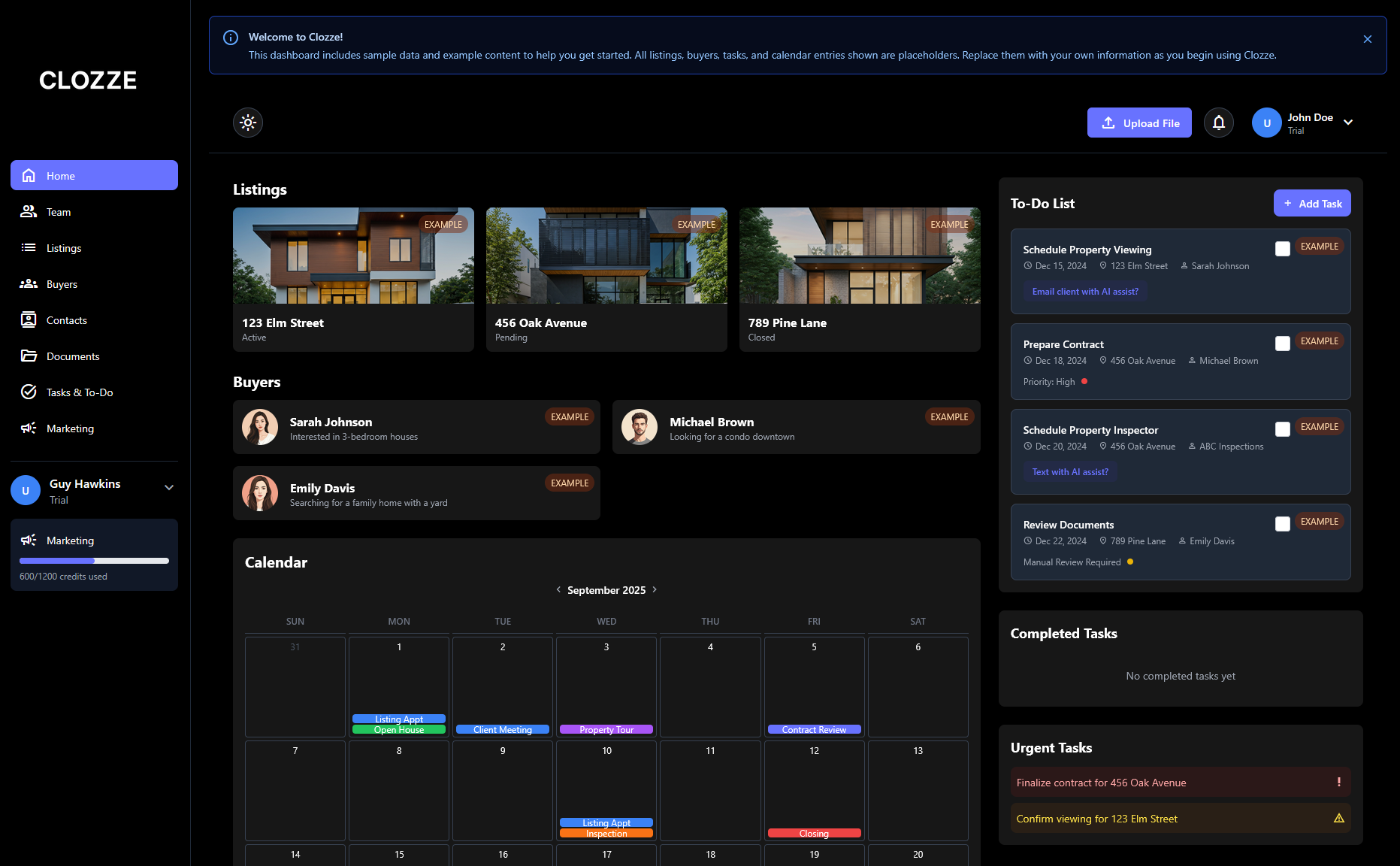
Clozze approaches the problem differently. It treats the transaction itself as the center of operations, connecting tasks, communication, documents, and deadlines in one workspace.
As production grows, complexity compounds.
A team handling ten deals can manage with email threads and shared folders. A brokerage managing hundreds of active contracts cannot. The risks multiply:
These are not technology problems. They are operational design problems.
Enterprise software solves them by standardizing how transactions move from contract to close. Instead of relying on individual memory or manual tracking, workflows become repeatable and visible.

Each deal should have a structured checklist that automatically assigns tasks based on contract dates. This ensures inspections, financing milestones, and compliance steps are not dependent on manual reminders.
Within Clozze’s feature set, tasks are tied directly to the transaction timeline, allowing teams to see overdue items instantly and redistribute workload when needed.

Email and SMS conversations scattered across personal inboxes create risk. Enterprise systems should connect communication directly to the transaction record.
This creates a searchable, permanent history that protects both agents and brokers.
Contract timelines drive real estate operations. Software should automatically calculate and surface key dates such as earnest money deadlines, inspection periods, and closing dates.
Visual deadline dashboards reduce reliance on manual calendar entries.
High volume teams process thousands of documents per month. The right system reduces manual data entry by extracting key details from uploaded contracts and syncing them to the transaction profile.
For deeper insight into structured document workflows, see this guide to real estate document management.
Broker oversight requires transparency. Enterprise platforms should log every action, including document uploads, task updates, and communication changes.
Permission controls ensure sensitive information is only visible to authorized users.
At scale, leadership needs answers quickly:
Clozze consolidates this information into a centralized dashboard. Brokers gain transaction-level visibility without micromanaging individual agents.
Key operational advantages include:
The result is predictable execution. Instead of reacting to problems, teams can proactively manage workload and deadlines.

Not necessarily.
Most brokerages already use a CRM for lead generation and relationship management. Enterprise transaction platforms typically integrate with those systems rather than replace them.
Clozze integrates with platforms such as Dotloop and Google Workspace, allowing contract data, calendar events, and communication records to stay connected. You can explore details in the overview of the Clozze and Dotloop integration.
This layered approach protects prior investments while improving operational control.
Enterprise adoption often raises security questions.
Real estate transactions involve financial records, personal identification, and legally binding contracts. Software must support:
Operational transparency and data protection go hand in hand. A system that logs activity and centralizes communication also reduces liability exposure.
When comparing solutions, focus on operational impact rather than feature lists.
Ask practical questions:
If the platform simply stores documents or tracks contacts, it is not enterprise-grade transaction software.
For teams evaluating cost structure and scalability, review the Clozze pricing page for current details.
Enterprise real estate software is no longer optional for high volume teams. As transaction counts rise, operational complexity increases faster than headcount.
The right system centralizes tasks, communication, and compliance into one controlled environment. Clozze positions the transaction as the operational core, giving brokerages the structure and visibility required to scale in 2026 and beyond.
.png)
Subscribe for real estate industry insights, transaction automation updates, and product news from Clozze. Get practical guidance on modern workflows, CRM tools, and transaction management delivered straight to your inbox.
Modern teams use Clozze to streamline transactions, clozze faster and smarter with Ai, so they can focus on what matters most.