
Business
Modern Real Estate Software Tools for 2026 Success
Modern real estate software helps agents manage deals, automate compliance, and track transactions. See why platforms like Clozze are redefining workflows in 2026.



If you are still managing client conversations in your inbox, tracking deadlines in a spreadsheet, and searching through folders to find the latest contract, you are not alone. Many agents outgrow basic tools long before they realize it. That is usually the point when real estate client management software becomes an operational necessity.
Here is what real estate client management software does, how it differs from a standard CRM, and how platforms like Clozze.io fit into a modern transaction workflow.
Real estate client management software is a system that helps agents, brokers, and transaction coordinators organize contacts, track communications, manage tasks, and oversee transactions from the first inquiry to closing.
Unlike generic CRM systems, real estate client management software is built around how property deals progress. It accounts for listings, inspections, contingencies, compliance requirements, escrow timelines, and collaboration between multiple parties in a transaction.
In simple terms:
The closer you are to contract and closing, the more industry-specific functionality matters.
Real estate is not just relationship-driven; it is deadline-driven.
An agent might be handling:
Trying to manage all of that in disconnected systems increases risk. Missed inspection dates, unsigned disclosures, or unlogged communications can quickly turn into compliance issues or damage client trust.
A dedicated client management platform helps you:
The result is not just organization. There are fewer errors and clearer accountability.
When evaluating platforms, focus on workflow support rather than surface features. The most valuable systems mirror how your team actually works.
Every client record should include:
Tools like Wise Agent and Follow Up Boss are widely used for managing and nurturing leads, especially in high-volume environments.

Deadlines drive real estate transactions. Inspection periods, financing contingencies, appraisal windows, and closing dates all require proactive tracking.
Strong platforms allow you to:
Automation reduces mental load and protects against missed steps.

When a client calls with a question, context matters.
Centralized communication logs allow anyone on the team to view:
This is key for teams where assistants or transaction coordinators step in mid-deal.
Transaction management becomes critical once a contract is signed.
Platforms such as Dotloop, Brokermint, and SkySlope focus heavily on document workflows and compliance oversight.
At minimum, your system should provide:

A visual pipeline answers one key operational question: where does every deal stand?
Look for dashboards that show:
This helps managers balance workloads and identify bottlenecks before they cause problems.
This is a common question.
A real estate CRM focuses on:
Transaction management software focuses on:
Some teams use separate systems for each function. Others prefer a connected workspace linking contact records directly to active deals.
Platforms like Clozze.io are especially valuable for teams wanting to coordinate seamlessly after a contract is signed.
Many CRMs are strongest at the top of the funnel, helping capture and nurture leads. The operational strain often begins once a deal goes under contract.
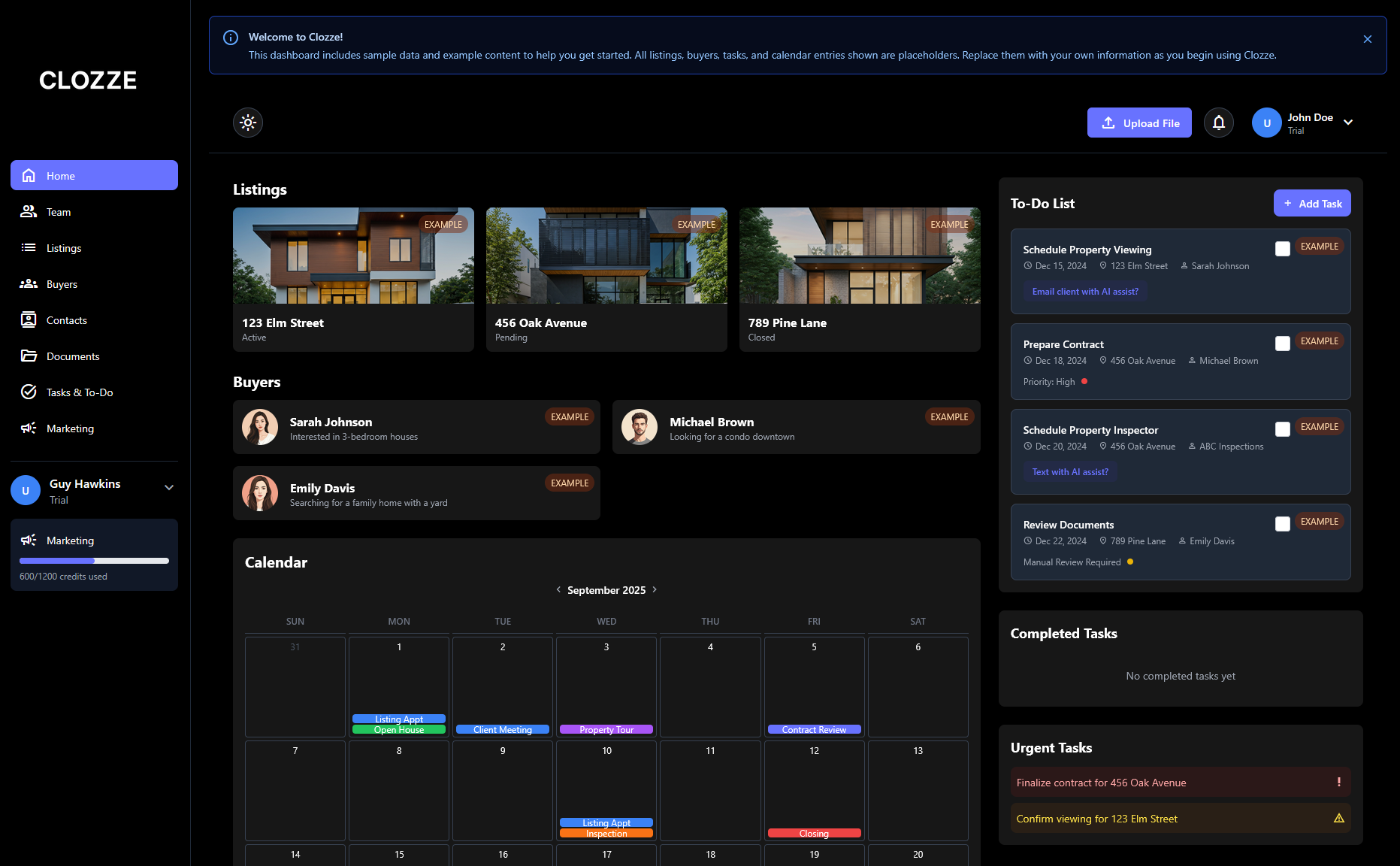
Clozze.io is designed around post-contract workflow and transaction coordination. It brings together:
Instead of switching between a CRM, spreadsheets, email threads, and a transaction platform, teams can operate inside a centralized workspace built for real estate operations.
Most brokerages do not rely on a single tool. The real value comes from integration.
For example:
Integrations reduce:
When systems communicate properly, teams spend less time reconciling data and more time serving clients.
Solo agents often prioritize:
Tools like Wise Agent or Follow Up Boss can work well for individual agents.
Growing teams and brokerages usually need:
In those environments, combining a CRM with a transaction-focused workspace such as Clozze.io enables stronger operational control.
The best choice depends on deal volume, support staff, and regulatory requirements.
Before comparing features, document how a deal moves through your team:
Choose software that fits your real process rather than forcing you into a generic template.
Ask about integration with:
Disconnected tools create friction and increase risk.
Request demos that simulate:
If the system is complicated during a demo, it will likely be more difficult under deadline pressure.
After implementation, track:
Software should reduce errors and the administrative burden.
Real estate client management software is no longer just about storing contacts. It focuses on reducing operational risk, improving transparency, and creating predictable workflows from first conversation to closing.
Agents relying on disconnected systems often feel busy but reactive. Teams operating within connected platforms gain clarity on deal status, task ownership, and next steps.
Whether you use a CRM-heavy approach, a transaction-first model, or a connected system like Clozze.io, the goal is the same: fewer dropped balls, tighter collaboration, and a smoother client experience.
That is what modern client management in real estate should deliver.
.png)
Subscribe for real estate industry insights, transaction automation updates, and product news from Clozze. Get practical guidance on modern workflows, CRM tools, and transaction management delivered straight to your inbox.
Modern teams use Clozze to streamline transactions, clozze faster and smarter with Ai, so they can focus on what matters most.