
Business
Modern Real Estate Software Tools for 2026 Success
Modern real estate software helps agents manage deals, automate compliance, and track transactions. See why platforms like Clozze are redefining workflows in 2026.



Real estate document management software is a system that stores, organizes, tracks, and secures all transaction documents from contract to close. It supports agents, brokers, and transaction coordinators in managing disclosures, signatures, deadlines, and compliance in one structured workflow.
Widely used platforms include Dotloop, SkySlope, and Brokermint. Many teams connect these tools with Clozze to centralize task management, transaction tracking, and communication alongside document workflows.
If you are managing active transactions, coordinating compliance, or overseeing a brokerage pipeline, document management software keeps deals organized and defensible.
Once a contract is signed, the real work begins: inspection deadlines, disclosures, amendments, lender conditions, and compliance reviews. If your files live in email threads or shared drives, things can slip.
Real estate document management software is designed specifically to prevent this.
It gives agents, brokers, and transaction coordinators a centralized system to:
Unlike generic cloud storage tools, these platforms are built around the lifecycle of a real estate transaction.
Every transaction has a defined digital home. Contracts, addenda, inspection reports, lender documents, and closing statements stay attached to the deal, not scattered across inboxes.
Brokerages need visibility. Most platforms offer checklist-based compliance tracking, so required documents are flagged before closing.
Agents, coordinators, clients, and brokers can see what is complete and what is missing. This reduces redundant follow-ups and errors.
Instead of manually tracking signatures and deadlines in spreadsheets, the system updates status in real time.
Every action, upload, edit, and signature is recorded. If there is ever a dispute or regulatory review, documentation is traceable.

Most systems follow a similar operational structure:
For example:
Each platform takes a slightly different approach but the core goal is consistent: every required document is kept organized and verifiable.
This is when document management becomes critical.
After contract execution, teams must manage:
A structured document management system connects each of these steps to tasks and files. If an inspection report is uploaded late, you see it. If a disclosure is missing, the checklist flags it.
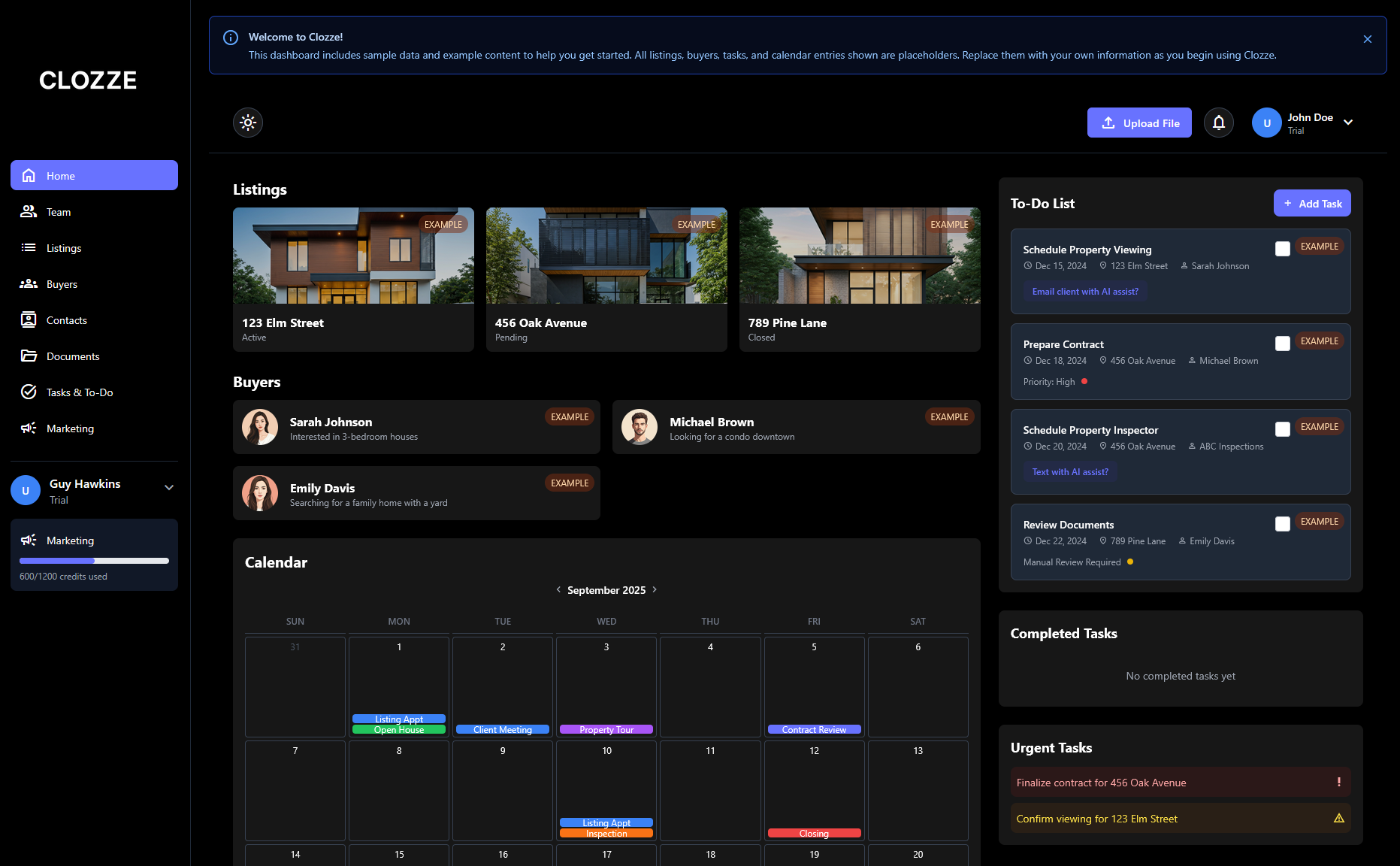
When paired with a transaction and workflow platform like Clozze, document updates can trigger task reminders, deadline alerts, and communication workflows. Instead of reacting to problems, you see them early.

Real estate teams often ask which platform is best. The answer depends on your operational structure.
Strong document editing and e-signature workflows. Widely adopted by agents for interactive contract management and real-time status tracking.
Brokerage-focused compliance oversight with structured digital checklists and audit review processes.
Transaction file management combined with back-office operations like commission tracking and reporting.
Clozze connects transaction management, task workflows, communication, and CRM data. It integrates with document platforms like Dotloop to provide a unified operational view of every deal without replacing specialized document tools.
Many brokerages use a combination of these systems, not just one. The aim is to reduce fragmentation.
Real estate files contain sensitive client information. Effective document management must provide:
Brokerages also benefit from standardized compliance checklists aligned with state and federal requirements.
If your current system cannot show who uploaded, viewed, or signed a document and when, it creates risk exposure.
A common workflow structure:
Instead of switching between tools for updates, the team views the entire transaction lifecycle in context.

It is a system designed to store, organize, and track all transaction documents while supporting compliance, signatures, and deadline management from contract to close.
It uses checklists, audit trails, and permission controls to ensure required documents are uploaded, reviewed, and approved before closing.
Some platforms combine both, while others specialize. Many brokerages use document-focused tools like Dotloop or SkySlope and connect them with a broader workflow system such as Clozze to centralize task tracking and deal visibility.
The best option depends on your brokerage size, compliance requirements, and workflow complexity. Dotloop, SkySlope, Brokermint, and Clozze are widely used, often together rather than as direct replacements.
Prioritize:
If your transaction process depends on email threads, shared drives, and manual reminders, risk increases with volume.
Real estate document management software adds structure to the operational side of a deal. It protects compliance, clarifies responsibilities, and creates a documented path from contract to close.
For teams aiming to unify document workflows with task management, CRM visibility, and transaction tracking, connecting document platforms with systems like Clozze provides a more complete operational framework.
The technology is not the focus—effective execution is.
.png)
Subscribe for real estate industry insights, transaction automation updates, and product news from Clozze. Get practical guidance on modern workflows, CRM tools, and transaction management delivered straight to your inbox.
Modern teams use Clozze to streamline transactions, clozze faster and smarter with Ai, so they can focus on what matters most.