
Business
Modern Real Estate Software Tools for 2026 Success
Modern real estate software helps agents manage deals, automate compliance, and track transactions. See why platforms like Clozze are redefining workflows in 2026.



If you have ever felt buried in deadlines, forms, and follow-ups after a contract goes under agreement, you already understand why transaction coordinators exist. Once a deal is signed, the real operational work begins. That is where a transaction coordinator earns their keep.
A transaction coordinator keeps deals moving, documents complete, and deadlines intact so agents can stay focused on clients and new business. This guide breaks down what transaction coordinators actually do, how they fit into an agent or team workflow, and how modern transaction management tools support their work.
A transaction coordinator is responsible for managing the administrative side of a real estate transaction from contract to close. Their job is not to sell or negotiate. It is to make sure every required step happens on time and is properly documented for compliance and audit requirements.
That includes tracking deadlines, organizing paperwork, coordinating with lenders and title companies, and ensuring brokerage and legal requirements are met. In short, they protect the transaction from falling apart due to missed details or incomplete documentation.
Agents drive revenue. Transaction coordinators protect execution.
Agents focus on pricing, negotiations, client relationships, and lead generation. Transaction coordinators focus on timelines, documentation, compliance, and communication between parties.
In high-volume environments, expecting agents to manage both roles often leads to missed details. That is why many productive agents eventually separate sales from operations for greater efficiency and reduced risk.
While duties vary by market and brokerage, most transaction coordinators handle the same core tasks:
Their value comes from consistency. Every deal follows a process, even when the transaction itself becomes complicated.

Transaction coordinators reduce risk and mental load for agents.
Agents who work with a dedicated coordinator often see:
For teams and brokerages, transaction coordination also creates operational leverage. One coordinator can support multiple agents using standardized workflows for improved efficiency.
Most transaction coordinators follow a predictable workflow, even if the tools vary.
This clear structure is why experienced coordinators can manage dozens of files at once without chaos.
Most transaction coordinators are paid per transaction. Fees vary by market and experience, but flat per-file pricing is the most common model. Some brokerages employ in-house coordinators, while others rely on independent contractors.
In some offices, transaction coordination is bundled into brokerage services. In others, agents choose their own coordinator and pay directly, depending on workflow preference and brokerage policy.
Not always. New agents often manage their own files to learn the process. The need becomes clear as transaction volume increases or compliance requirements become more complex.
If you are handling multiple active escrows at once and spending extra hours managing paperwork, a transaction coordinator becomes a safeguard rather than a luxury.
Transaction coordinators rely on specialized software to stay organized and compliant. Common tools include:
DotloopDotloop is widely used for managing real estate transaction documents, forms, and signatures. It helps coordinators track transaction stages and ensure required paperwork is completed, but it is primarily document focused.
DocuSign
DocuSign is commonly used for electronic signatures on contracts and disclosures. While it streamlines signing, it does not manage tasks, deadlines, or communication tied to the transaction.
Follow Up Boss
Follow Up Boss is used to manage leads, contacts, and client communication before and during a transaction. It functions as a CRM, but transaction execution and task tracking often happen elsewhere.
Google Workspace
Google Workspace tools like Gmail, Google Calendar, and Google Drive are frequently used for communication, scheduling, and document storage. These tools are flexible but require manual coordination to stay aligned with transaction workflows.
Trello
Some transaction coordinators use Trello or similar task boards to track transaction steps. While helpful for visual task tracking, these tools are not built specifically for real estate transactions or compliance requirements.
Each of these tools supports a specific part of the transaction coordinator workflow. The challenge is keeping everything connected for smooth operations.

Most teams do not need another standalone platform. They need visibility across the tools they already use.
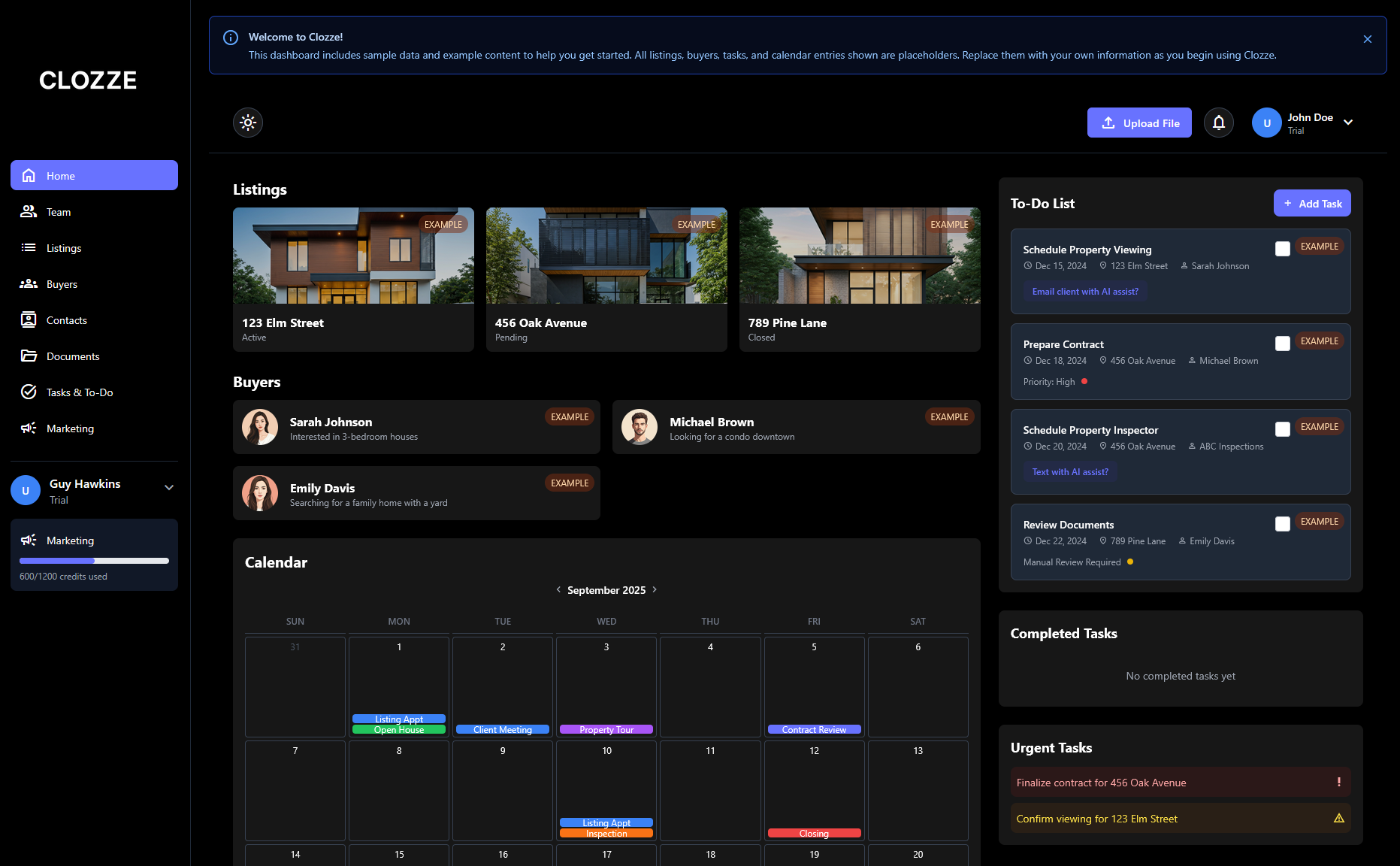
Clozze acts as a shared workspace that connects clients, tasks, timelines, and communication across your CRM and transaction systems. Instead of jumping between platforms, agents and transaction coordinators can see the full picture of a deal in one place.
Teams use Clozze to:
Clozze does not replace tools like Dotloop or SkySlope. It sits above them, helping teams operate with greater clarity instead of fragmentation.

Agents and teams that get the most value from transaction coordination usually follow a few simple rules:
Transaction coordination works best when the process is respected, not improvised for each deal.
Strong transaction coordinators tend to share these traits:
While tools are important, discipline and consistency are essential for successful coordination.
A transaction coordinator is not an assistant. They are an operational safeguard for agents and teams.
As transactions become more complex and clients expect seamless experiences, separating sales from execution becomes essential. With a reliable coordinator and the right connected systems, agents can scale without sacrificing quality or compliance.
That is how deals close cleanly, even when the real estate market is unpredictable.
.png)
Subscribe for real estate industry insights, transaction automation updates, and product news from Clozze. Get practical guidance on modern workflows, CRM tools, and transaction management delivered straight to your inbox.
Modern teams use Clozze to streamline transactions, clozze faster and smarter with Ai, so they can focus on what matters most.