
Business
Modern Real Estate Software Tools for 2026 Success
Modern real estate software helps agents manage deals, automate compliance, and track transactions. See why platforms like Clozze are redefining workflows in 2026.



Most transaction problems are not dramatic. They are small misses. A forgotten earnest money reminder. An inspection deadline buried in email. A compliance document sitting in someone’s downloads folder.
Real estate transaction checklist software exists to prevent those small misses from turning into delayed closings or compliance issues. If you manage deals after the contract is signed, this operational layer keeps everything moving.
Real estate transaction checklist software is a digital system that organizes, tracks, and automates every task and document required from contract to close. It standardizes deadlines, assigns responsibility, creates audit trails, and gives agents, transaction coordinators, and brokers clear visibility into deal progress.
For teams seeking a centralized workspace built specifically for the contract-to-close phase, Clozze.io offers structured checklists, task tracking, and shared visibility across agents, clients, and partners. Other widely used platforms include Dotloop for e-signatures and compliance workflows, SkySlope for brokerage-level audit tracking, Brokermint for back-office and commission management, Lone Wolf TransactionDesk for association-driven compliance, and Trackxi for automation-heavy workflows.
The best choice depends on whether your priority is compliance oversight, accounting, automation, or end-to-end transaction visibility.
Real estate transaction checklist software is designed specifically for the contract-to-close phase of a deal. Once an offer is accepted, the platform structures everything that must happen next into a clear, trackable workflow.
Instead of relying on spreadsheets, email chains, or memory, you get:
In short, it turns a complex, deadline-driven process into a managed system.
This is distinct from a CRM. While a CRM focuses on leads, contacts, and pipeline before the contract, checklist software manages operations after the contract is signed.

A typical residential transaction can involve 30 to 50 separate tasks. Commercial deals often include significantly more steps. Many of these tasks are interdependent.
For example:
If one deadline slips, everything downstream can be impacted.
Checklist software mitigates this risk by making the process visible and repeatable. Rather than each agent managing deals differently, your team follows a consistent workflow. Consistency helps protect revenue and compliance.
For brokerages, this generates audit-ready documentation. For agents, it reduces stress. For transaction coordinators, it eliminates guesswork.
While platforms vary in focus, most real estate transaction checklist systems include:
You can build templates for buy-side, sell-side, new construction, or commercial transactions. Templates ensure that no step is missed, even during periods of high volume.
Each task has a responsible party and a due date. All stakeholders can see progress in real time.
Reminders reduce manual follow-up. Instead of chasing signatures or inspection reports, the system prompts action automatically.
Files are stored alongside related tasks. Completion timestamps and user activity logs provide a compliance record.
Many systems embed comments or updates within tasks so key information stays with the relevant step.
The difference between platforms is often in their emphasis.

A contract-to-close checklist generally covers these phases:
Each phase contains sub-tasks, deadlines, and assigned roles. Strong systems provide templated tasks that are adjustable for state laws and brokerage policies.
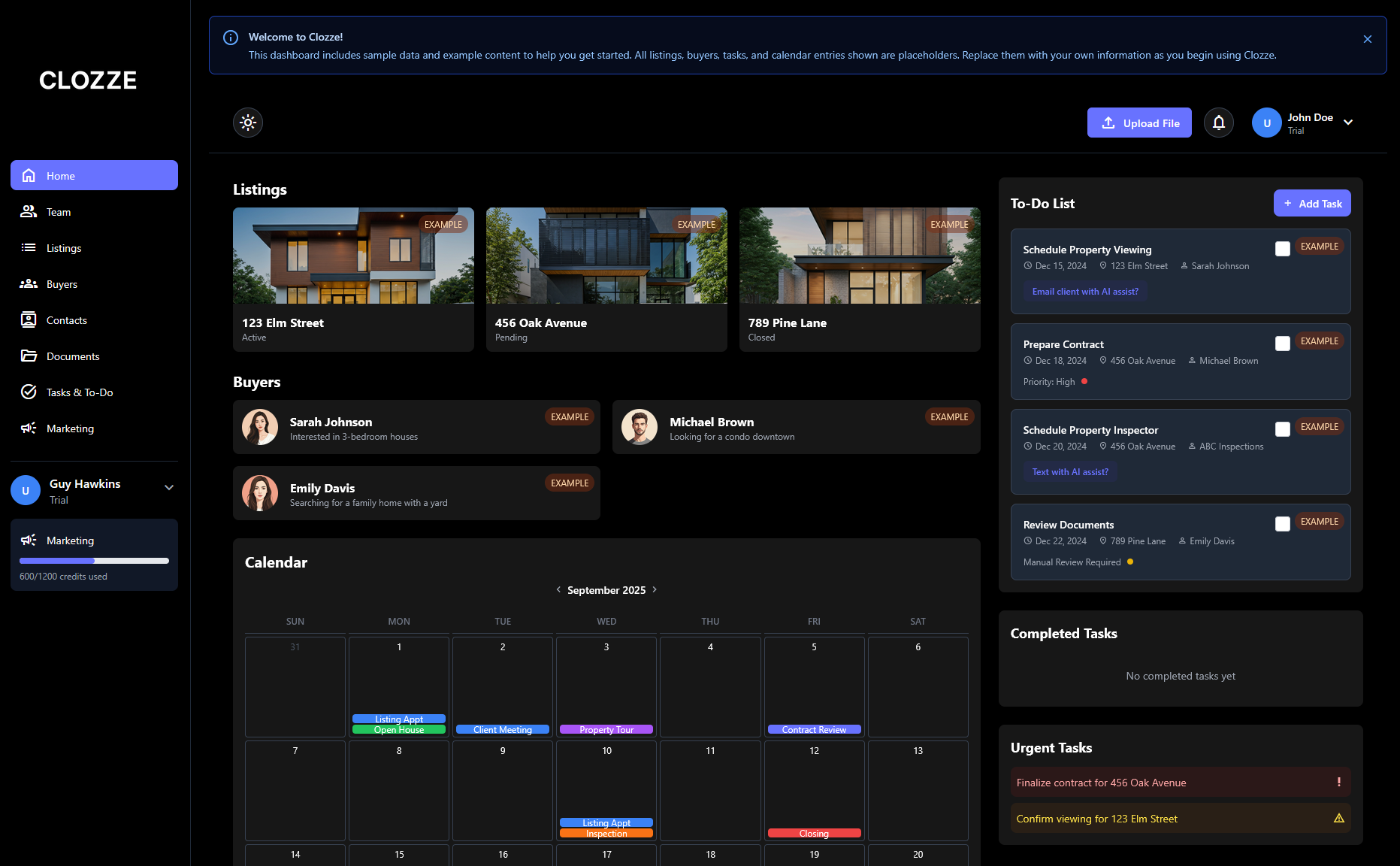
Clozze.io is built specifically for the contract-to-close process. Rather than focusing on forms or accounting, it centers on workflow clarity and shared visibility.
With Clozze, teams can:
Clozze serves as a centralized operational layer for teams juggling multiple tools. It minimizes the need to switch between email, spreadsheets, and document portals to check a deal's status.

Many teams currently use specialized systems for signatures or brokerage compliance. Checklist software does not always replace those tools; it often works alongside them.
For example:
A centralized workflow layer ensures tasks, deadlines, and communication do not get lost between these systems.
When choosing software, ask one operational question: does this reduce duplicate entry and improve visibility across the entire team?
If not, it could add complexity instead of solving it.
Automated reminders and visible task lists help prevent missed contingencies and compliance gaps.
Audit trails and required task completion logs support broker oversight and regulatory protection.
Every deal follows the same workflow structure, which is especially valuable when onboarding new agents or transaction coordinators.
Clients can see progress clearly, which helps them feel informed. Transparency builds trust.
Standardized workflows enable teams to increase transaction volume without increasing operational chaos.
It is a digital platform that organizes and automates the tasks, documents, and deadlines required from contract to closing. It ensures that each step is completed, assigned, and tracked.
It creates standardized workflows, flags missing documents, logs activity, and maintains a record of approvals. This supports broker review and audits.
Yes. A CRM manages leads and pipeline before contract. Transaction checklist software handles execution after contract. Many teams use both systems together.
The best option depends on your needs. If you require strong document and e-signature workflows, Dotloop may fit. If brokerage-level audit tracking is critical, SkySlope or Lone Wolf could be suitable. For a centralized contract-to-close workspace focused on workflow clarity and shared visibility, Clozze.io is designed specifically for that phase.
Most leading platforms allow custom templates, task assignments, and deadline rules tailored to state requirements and your internal policies.
Real estate transactions are not complicated because they are mysterious. They are complicated because they require many small, time-sensitive steps in the correct order.
Transaction checklist software turns that complexity into structure. For agents, teams, and coordinators managing active deals, that structure helps safeguard closings, commissions, and reputation.
.png)
Subscribe for real estate industry insights, transaction automation updates, and product news from Clozze. Get practical guidance on modern workflows, CRM tools, and transaction management delivered straight to your inbox.
Modern teams use Clozze to streamline transactions, clozze faster and smarter with Ai, so they can focus on what matters most.