
Business
Modern Real Estate Software Tools for 2026 Success
Modern real estate software helps agents manage deals, automate compliance, and track transactions. See why platforms like Clozze are redefining workflows in 2026.



Most real estate professionals do not struggle with selling homes. They struggle with everything that happens around the sale. Emails pile up, documents come in late, deadlines are tracked in spreadsheets, and someone is always asking for a status update that should be easy to answer. AI automation is stepping in to handle that operational load, not by replacing people, but by removing the busywork that slows deals down.
AI automation for real estate tasks has moved from a nice-to-have to a core part of how agents, brokers, and transaction coordinators manage transactions. Used well, it reduces manual follow-up, improves visibility, and keeps deals moving from contract to close without constant checking and rechecking.
This article breaks down what AI automation actually means in a real estate context, which tasks are commonly automated, the tools professionals rely on, and where Clozze fits into a modern real estate workflow.
AI automation in real estate refers to software that uses artificial intelligence to handle repetitive, rules-based tasks that agents and coordinators traditionally manage by hand. This includes task reminders, document tracking, communication workflows, compliance checks, and data syncing between systems.
The practical benefit is clear: fewer missed deadlines, less time spent chasing documents, and better insight into where every transaction stands. Instead of jumping between email, spreadsheets, CRM, and transaction management tools, teams work from systems that surface what needs attention next.

Most real estate workflows follow predictable patterns. AI automation works best in these repeatable areas.
AI-powered CRMs can respond to new inquiries, route leads to the right agent, and trigger follow-up tasks based on timing or lead quality. Many teams use chatbots or virtual assistants to answer basic questions and book showings so leads are not left unattended.
Automated communication handles routine updates like document requests, milestone notifications, and closing reminders. Instead of writing the same email many times, agents and coordinators rely on templates triggered by deal stage or task completion.
Once a contract is signed, AI-driven systems generate a checklist based on transaction type, assign responsibilities, and set deadlines. As tasks are completed, timelines update automatically so everyone sees the same information.
Many platforms now review uploaded files for completeness, flag missing signatures, and extract key information for compliance records. This reduces back-and-forth with clients and lowers the risk of incomplete files at closing.

Automated text and email workflows keep clients informed without manual effort. From introductions to final walkthrough reminders, consistent updates improve the client experience and reduce coordinator workload.
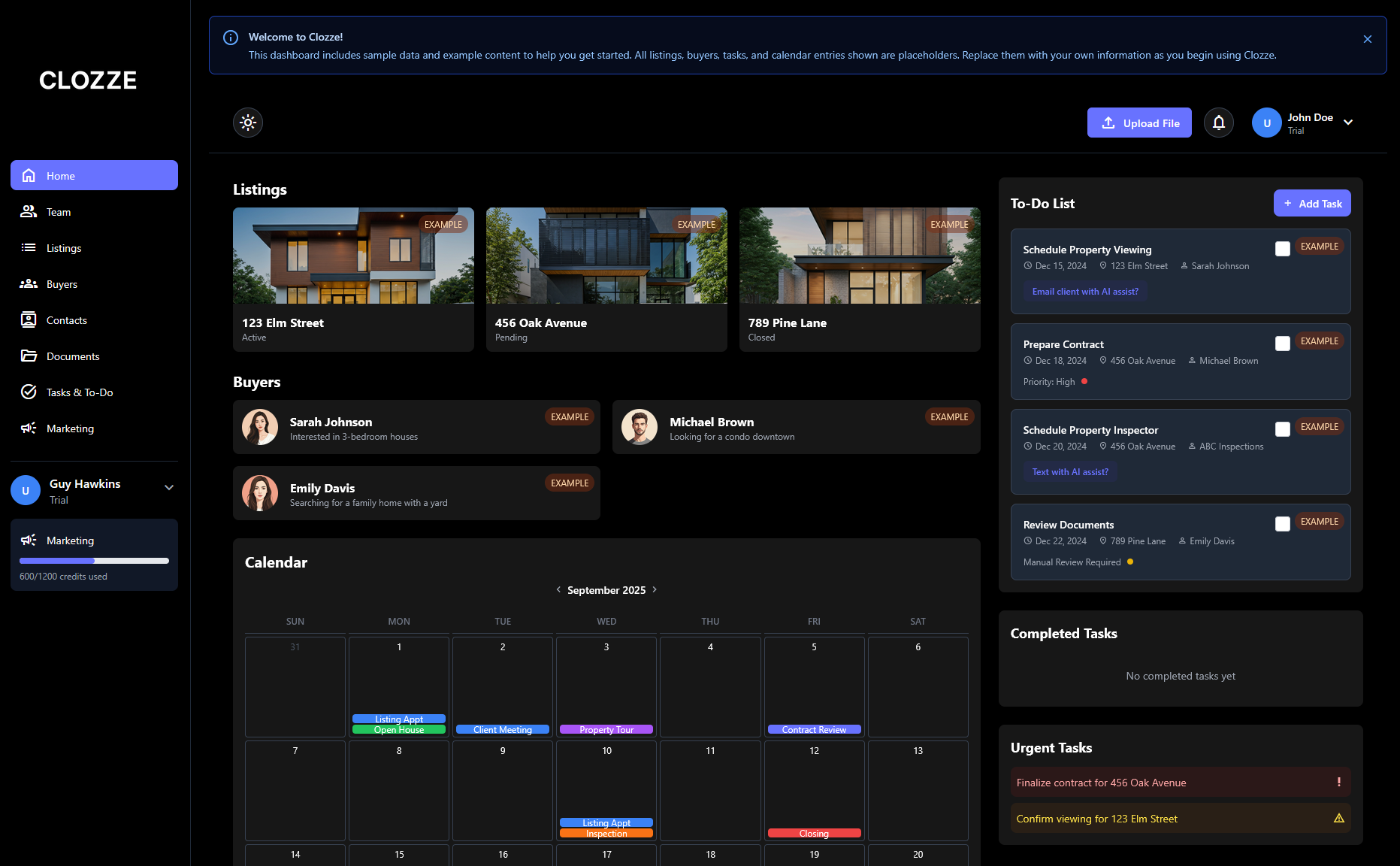
AI systems can pull data from CRMs, transaction management platforms, and communication tools into a shared dashboard. Agents and coordinators quickly see what is done, what is missing, and what is coming up next.
Most teams rely on a combination of tools, each focused on a specific part of the workflow.
Dotloop is widely used for transaction management and document workflows. It supports e-signatures, document organization, and deadline tracking, helping agents manage contract paperwork and compliance requirements.
Follow Up Boss focuses on lead management and follow-up automation. Its automations help route leads, trigger text and email responses, and highlight high-priority contacts that need attention.
Brokermint supports brokerage operations such as commission tracking, agent onboarding, and transaction management. Automation features include compliance reminders, task alerts, and financial workflow tracking.
SkySlope is commonly used for compliance automation and digital forms. Brokerages rely on it to track documents, manage approvals, and avoid missed signatures.
Clozze connects these systems instead of replacing them. It integrates with tools like Dotloop, Follow Up Boss, Brokermint, and SkySlope to surface tasks, timelines, communications, and deal status in one workspace. AI-driven reminders, follow-ups, and compliance visibility help agents and coordinators stay ahead of details without juggling multiple platforms.
Before automation, transaction management often lived across inboxes, spreadsheets, and phone calls. AI-powered platforms centralize tasks, timelines, documents, and messages so teams can quickly see where a deal stands. Automated workflows move transactions forward and alert the right person when action is needed.

When a contract is uploaded, an AI system can trigger a full task list, assign owners, set deadlines, and start compliance checks. Reminders go out automatically if something is missing or overdue. This reduces delays and eliminates common errors.
Modern platforms integrate with CRMs and transaction tools so data flows between systems automatically. When Clozze is connected to Dotloop or Follow Up Boss, updates made in one tool appear across the workspace, removing duplicate data entry and manual status checks.
1. Tasks are generated based on transaction type, with deadlines and owners assigned.
2. Automated emails request required documents from clients and partners.
3. Uploaded files are reviewed, and missing items are flagged.
4. Buyers, sellers, and agents receive progress updates and next steps.
5. All requirements are confirmed before closing.
Clozze brings listings, buyers, documents, tasks, timelines, and communication into a single operational view. AI-assisted automation supports daily transaction work through smart reminders, document progress tracking, centralized communication, and seamless integration with existing tools. The result is less time spent managing details and more time spent supporting clients.
Learn more at Clozze.
Most teams save several hours per week by reducing manual follow-up and rework. Fewer missed steps and clearer communication often translate into smoother closings and higher client satisfaction.
Reputable platforms use encryption, access controls, and audit trails to protect sensitive information. Compliance workflows are designed to meet brokerage and regulatory requirements.
No. AI handles repetitive tasks, not judgment or relationship management. Agents and coordinators remain responsible for decisions and client experience, with automation freeing up time for higher-value work.
AI adoption will continue to grow as teams look for clearer, more reliable transaction processes. The focus is shifting toward connected systems, real-time visibility, and accountability across every stage of a deal. Platforms like Clozze support this shift by tying existing tools together and keeping the operational side of real estate easier to manage.
.png)
Subscribe for real estate industry insights, transaction automation updates, and product news from Clozze. Get practical guidance on modern workflows, CRM tools, and transaction management delivered straight to your inbox.
Modern teams use Clozze to streamline transactions, clozze faster and smarter with Ai, so they can focus on what matters most.